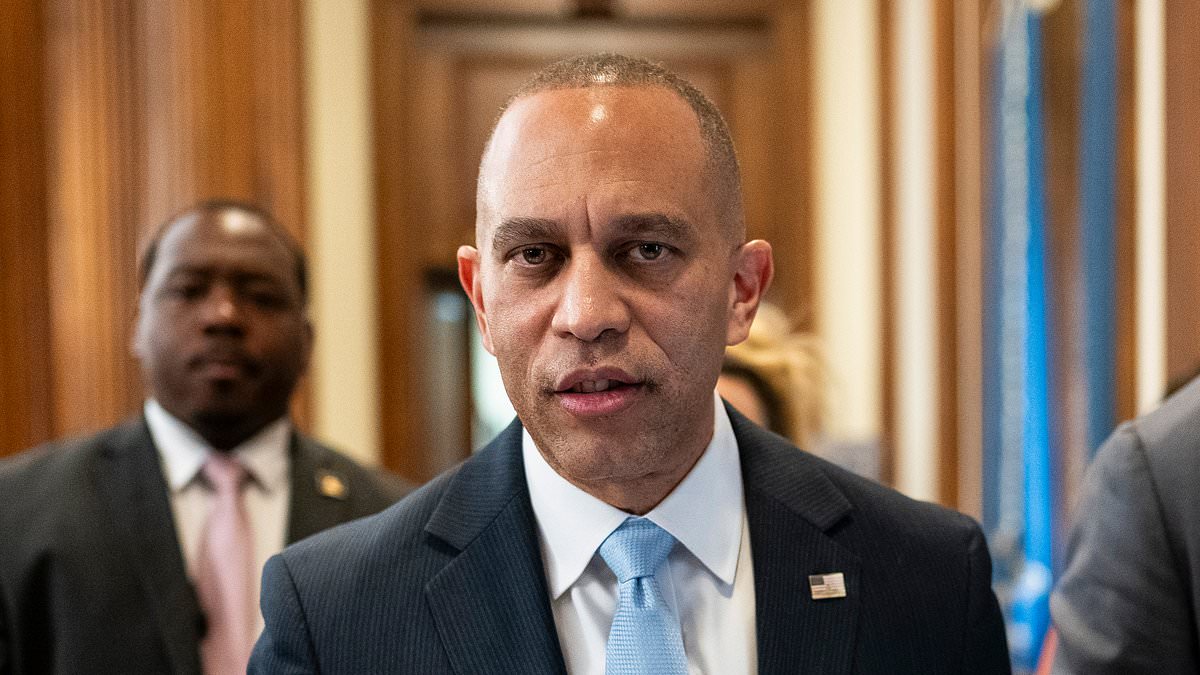
Hakeem Jeffries Controversy: Allegations, Denials, and Political Fallout
In the high-stakes arena of Washington D.C., where careers can be forged or fractured overnight, House Minority Leader Hakeem Jeffries finds himself at the epicenter of a swirling controversy. As a prominent figure and a rising star within the Democratic Party, Jeffries' every move is under intense scrutiny. Recently, this scrutiny has sharpened with the emergence of what some media outlets and social media users have dubbed the "Hakeem Jeffries affair," sparking widespread debate and speculation about its potential impact on his political trajectory.
The allegations have cast a shadow over Jeffries' otherwise ascendant career, pushing his personal and professional life into the national spotlight. While official statements from his office have vehemently denied any wrongdoing, the incident underscores the relentless pressure and intense public gaze that accompanies high-profile political positions, serving as a stark reminder of how quickly reputations can be challenged in the digital age.
Unpacking the Core of the Allegations: The "Hakeem Jeffries Affair"
The heart of the current controversy revolves around allegations of an inappropriate relationship involving Representative Jeffries and a staff member. While specific details remain largely shrouded in rumor and unverified claims, the narrative circulating online and in certain media circles suggests an ethical breach of conduct. Such allegations, irrespective of their veracity, carry significant weight in the political landscape, particularly when directed at leaders who are expected to uphold the highest standards of integrity.
The rapid spread of these claims highlights the dual-edged sword of modern communication. Social media platforms, in particular, act as powerful amplifiers, transforming whispers into widespread discussions in a matter of hours. This accelerated information cycle often means that allegations gain traction long before comprehensive facts can be established or debunked, creating a challenging environment for public figures attempting to manage their image and communicate their truth. The lack of concrete, verifiable evidence has done little to quell the discussion, instead fueling speculation and inviting a diverse range of interpretations from the public and political observers alike.
Official Denials and Claims of Political Motivation
In response to the burgeoning controversy, Hakeem Jeffries' office has issued robust denials, labeling the claims as baseless and politically motivated. This strategy is not uncommon in political crises, where public figures often attribute damaging allegations to partisan attacks or smear campaigns designed to undermine their authority and influence. For Jeffries, who is widely seen as a potential future Speaker of the House and a key voice for the Democratic Party, the timing of these allegations is particularly salient.
Supporters of Jeffries have rallied to his defense, echoing the sentiment that these claims are nothing more than tactical maneuvers by political adversaries. They argue that the allegations are strategically timed to derail his momentum and distract from his legislative agenda. This perspective suggests a calculated effort to weaponize personal allegations for political gain, a tactic that, while frowned upon, is a recurring feature of competitive politics. The challenge for Jeffries and his team is to effectively counter these claims, not just with denials, but by reinforcing public trust in his leadership and character amidst the swirling accusations.
The Political Fallout and Intense Public Scrutiny
The "Hakeem Jeffries affair" controversy comes at a critical juncture for the House Minority Leader, who has been steadily climbing the ranks of power within the Democratic Party. As a rising star under fire, the allegations pose a significant test to his leadership and his prospects for future advancement. The political fallout from such an event can be multifaceted, affecting not only his personal reputation but also his ability to effectively lead his caucus and negotiate across the aisle.
Public reaction has been predictably polarized. While many of Jeffries' constituents and party members express solidarity and skepticism towards the allegations, others—including political opponents and segments of the general public—are calling for a thorough investigation to ascertain the truth. This division highlights a broader challenge in modern politics: how to balance the presumption of innocence with the public's demand for transparency and accountability from their elected officials. For high-profile figures like Jeffries, navigating this landscape requires not just a strong defense, but also a strategic approach to maintaining public confidence and demonstrating unwavering commitment to their duties.
Practical Tip for Navigating Political Controversies: In an era of rapid information dissemination, public figures facing allegations often benefit from a two-pronged approach: robustly denying false claims while simultaneously focusing on their policy work and legislative achievements. Demonstrating continued dedication to public service can help shift the narrative back to their professional contributions, showcasing resilience and commitment despite personal attacks.
Broader Context: Politics, Allegations, and Reputation Management
The situation surrounding Hakeem Jeffries is not an isolated incident; history is replete with examples of prominent politicians facing accusations of misconduct. From alleged affairs to financial improprieties, such controversies are an inherent, if unwelcome, part of political life. They underscore the immense pressure that accompanies holding public office, where one's private life is often indistinguishable from their public persona in the eyes of the media and the electorate.
The ongoing saga serves as a compelling case study in political reputation management. For any public figure, a crisis demands swift, strategic communication, consistent messaging, and a clear path forward. The challenge lies in separating fact from rumor, combating misinformation, and rebuilding trust, all while continuing to perform the duties of their office. It also shines a light on the ethical considerations within political campaigns and opposition research, where the line between legitimate scrutiny and personal attacks can often become blurred.
Fact: Historically, allegations of personal misconduct, while potentially damaging, do not always end a politician's career. The outcome often depends on the nature of the allegations, the strength of the evidence (or lack thereof), the politician's response, public perception, and the broader political climate.
Conclusion
The "Hakeem Jeffries affair" remains a significant and evolving story, emblematic of the challenges faced by leaders in today's hyper-connected and often-polarized political environment. While allegations persist and are debated across various platforms, Hakeem Jeffries' office continues to issue strong denials, framing the claims as politically motivated attacks. The ultimate political fallout from this controversy is yet to be fully determined, but it undeniably places a spotlight on the House Minority Leader as he navigates these turbulent waters. Regardless of the truth behind the allegations, the incident serves as a powerful reminder of the relentless scrutiny, the fragility of reputation, and the constant demand for integrity that defines life in the public eye. For citizens, it reinforces the importance of critically evaluating information and distinguishing between substantiated facts and unsubstantiated claims.